Start with an age-aware plan
Use a schedule built around your babies' age, naps, wake windows, and morning wake time.
When schedules do not line up
One baby is ready for a nap. The other just woke up. One sleeps long, the other wakes early. A shared twin sleep schedule can be the goal, but getting there takes more than wishful thinking.
The pain point
Parents of twins often hear that the babies should be on the same schedule, then run into real life: different nap lengths, early wakes, day care timing, feeding needs, and two very different temperaments.
The result is constant mental math. Do you wake one baby to protect the next nap? Let them drift apart? Move bedtime? A twin sleep schedule works best when the plan is visible and the real day is easy to track.
How the app helps
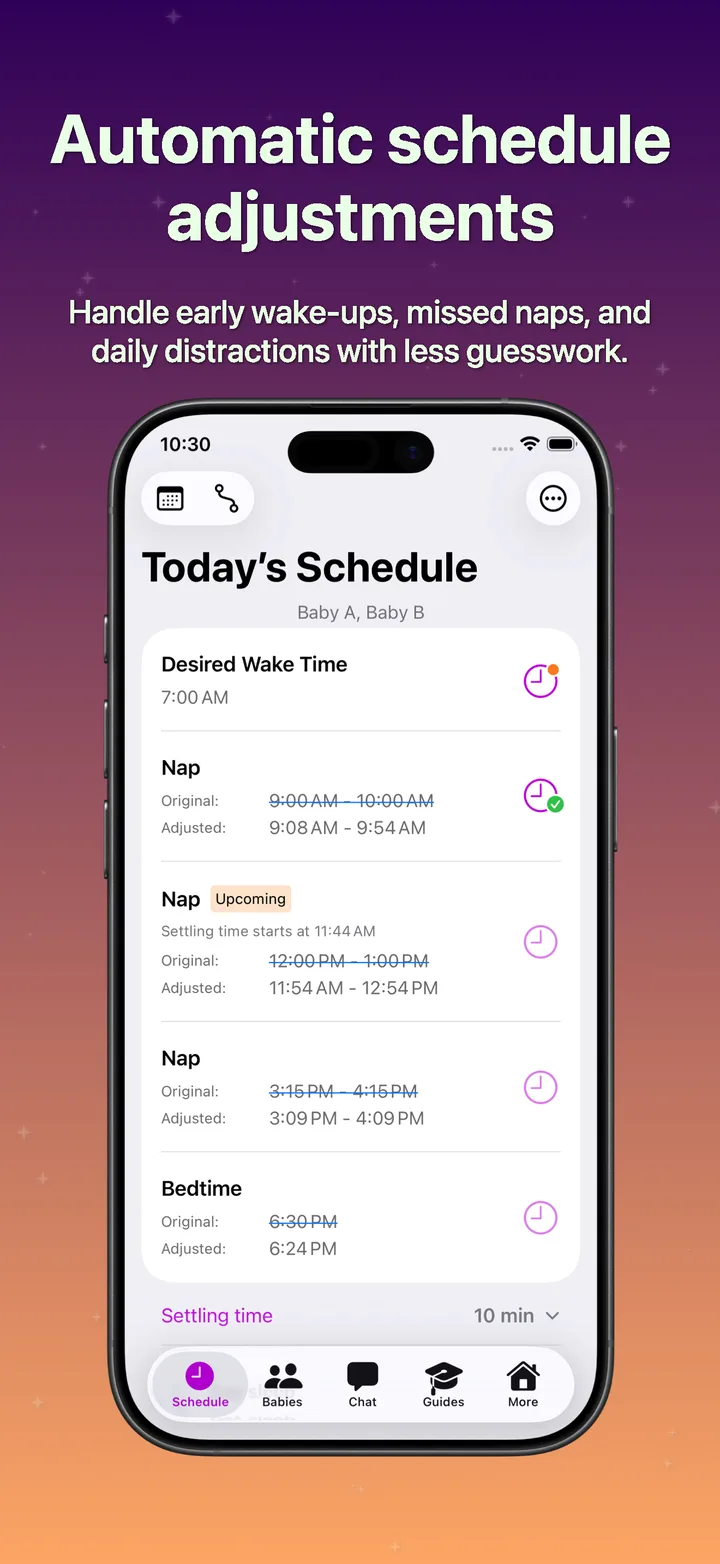
Build one practical sleep plan for the day, then log what each baby actually did so you can adjust without losing the bigger rhythm.
Use a schedule built around your babies' age, naps, wake windows, and morning wake time.
Keep one shared plan while logging each twin's sleep, wakes, mood, and feeds on their own.
When one baby has a short nap or early wake, SleepyTwins helps you keep the rest of the day organized.
A steadier next step
SleepyTwins supports the normal twin-parent tension: one schedule may be the goal, but each baby still needs individual tracking and real-day flexibility.
FAQ
Start with a consistent shared plan, track each baby's actual sleep, and adjust based on patterns instead of one rough nap or night.
Yes. SleepyTwins is built so families can follow a shared schedule while logging each baby's day separately.
The app helps you see whether one baby is having a temporary disruption or a repeated pattern that may need a schedule adjustment.
Download SleepyTwins on iPhone to follow the schedule, log what actually happened, and adjust the plan as your babies grow.